Roof Repair or Replacement? 7 Signs That Help You Decide
Use these seven signs to tell whether your roof needs a fix or a fresh start, and what each one means for your budget.

Use these seven signs to tell whether your roof needs a fix or a fresh start, and what each one means for your budget.
A water stain on the ceiling or a few shingles in the yard leaves you with one expensive question: can this roof be fixed, or does it need to be replaced? Get it wrong one way and you pay for a new roof that had years left in it. Get it wrong the other way and you pay for repair after repair on a roof that was already finished.
The good news is that the decision is rarely a coin flip. Seven signs, most of which you can check from the yard or the attic, point clearly one way or the other.
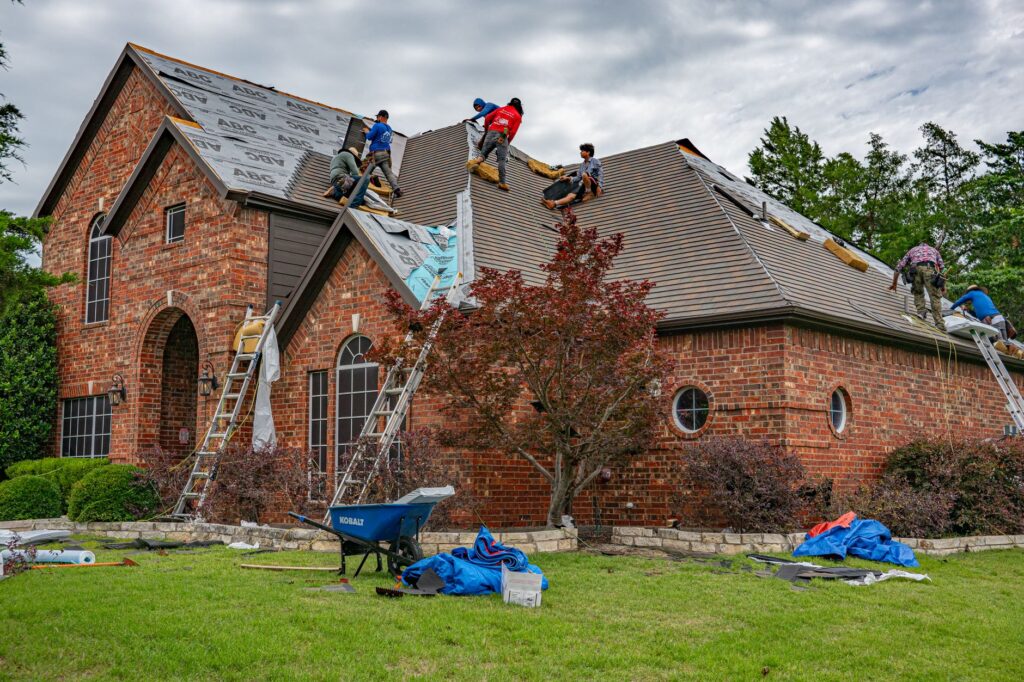
Throughout this guide, a repair means fixing a specific area: replacing damaged shingles, resealing or replacing flashing, or swapping out a cracked pipe boot. A replacement means tearing the roof off down to the wood decking and installing a complete new system, including underlayment, flashing, and ventilation. The signs below are listed roughly in order of how much weight each one carries.
Architectural asphalt shingles in East Tennessee usually last somewhere around 20 to 25 years, and less when attic ventilation is poor. On a roof under 15 years old, repairs almost always make sense. Past about 18 years, every repair dollar buys less time, because the shingles around the fix are wearing out too.
The gritty surface on a shingle protects the asphalt underneath from the sun. When you find piles of granules at the bottom of your downspouts, or see dark, bald patches on the roof, the shingles are near the end of their life. Granule loss across the whole roof points to replacement. A small bare spot after a storm can often be repaired.
Look at the shingle edges from the ground with binoculars. One or two lifted tabs after a windstorm are a repair. Curling or cracking spread across several areas means the shingles have dried out, and patching one spot will not stop the next one.
A single leak at a chimney or vent is usually a flashing problem and a straightforward roof repair. Leaks in more than one place, or the same leak fixed more than once, usually mean the roof as a whole is failing.
This one outranks everything else. A roofline that dips between rafters, or daylight showing through the boards when you look up from the attic, means the decking or structure underneath is damaged. Shingles cannot fix that. It calls for a roof replacement with the damaged decking cut out and replaced, and it should be looked at soon.
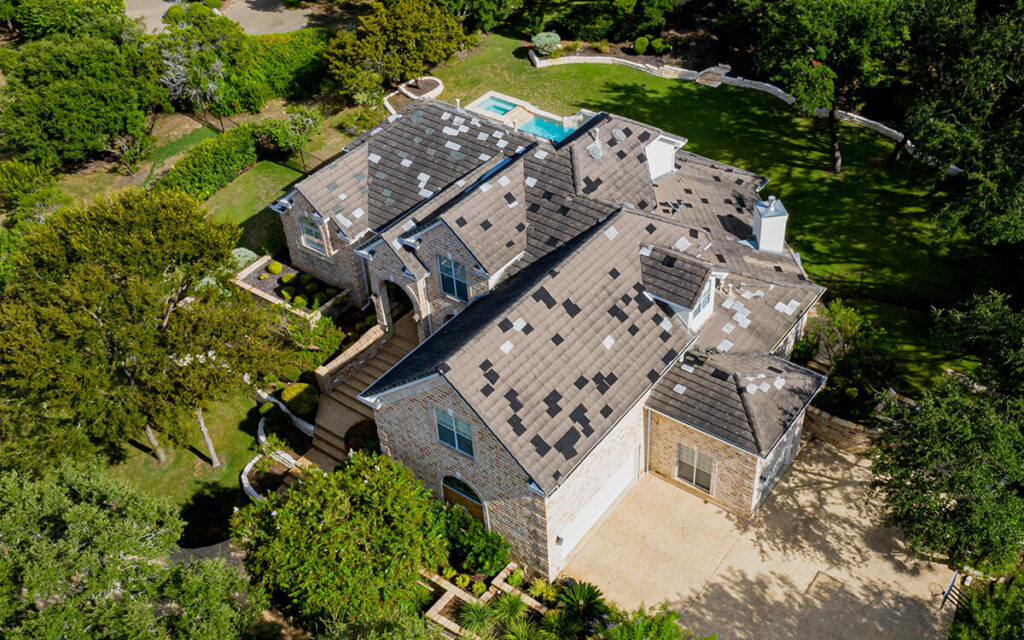
After hail or high wind, the question is how widespread the damage is. A few creased or missing shingles on one slope is a repair. As a rough rule of thumb, once damage covers about a third of the roof or more, replacing it is usually the better value, and it is often what an insurance claim covers. Our storm damage roof repair page explains how that process works.
If you expect to sell within a few years, a sound repair on a middle-aged roof may be all you need. If you plan to stay ten years or longer, replacing a roof that is already near the end of its life usually costs less than the string of repairs it would need in the meantime.
A roof under about 12 years old, a leak traced to one flashing detail or pipe boot, or a handful of shingles lost in a storm are all repair jobs. Any roofer who recommends replacing a young roof for one of those problems should be able to show you exactly why.
Answer each question from the ground, from inside the attic, or from your own records. Count how many you answer yes.
0 to 1 yes: a repair is very likely the right call. 2 to 3 yes: get an inspection before you decide; it could go either way. 4 or more yes: start planning a replacement, because repairs will keep coming and each one buys less time.
This is a rough guide, not a diagnosis. A sagging roofline or daylight in the attic outweighs everything else on the list. Call right away if you see either.
It depends on the rest of the roof. On a roof under about 15 years old that is otherwise in good shape, a proper repair should last as long as the surrounding shingles. On a roof past 20 years, a repair may only buy a season or two before the next problem shows up somewhere else.
Sometimes. If one slope took storm damage and the roof is fairly young, replacing that slope can make sense. The trade-off is that new shingles will not match the weathered ones exactly, and the older side keeps aging on its own schedule.
That depends on your policy and the cause. Sudden damage from wind or hail is often covered; normal wear and age usually are not. Dated photos from an inspection give your adjuster a clear record of what happened and when.
It costs less up front, but it hides soft decking and old flashing, adds weight, and usually shortens the life of the new shingles. Building codes also limit how many layers a roof can carry, so an overlay is often not an option on older homes.
Ask for photos of every problem, a written explanation of what each one means, and a repair price alongside any replacement price. If a roofer recommends replacing a young roof without showing you why, get a second opinion.
Spring and fall offer the mildest working weather in the Chattanooga area, but roofs can be replaced most of the year. An active leak should never wait for better weather.
Call now or request your free estimate. Inspections are free, estimates are in writing, and there is never any pressure to sign.